How RootaRig Reinvents Trucking Allocation for Fast-Paced Fleets
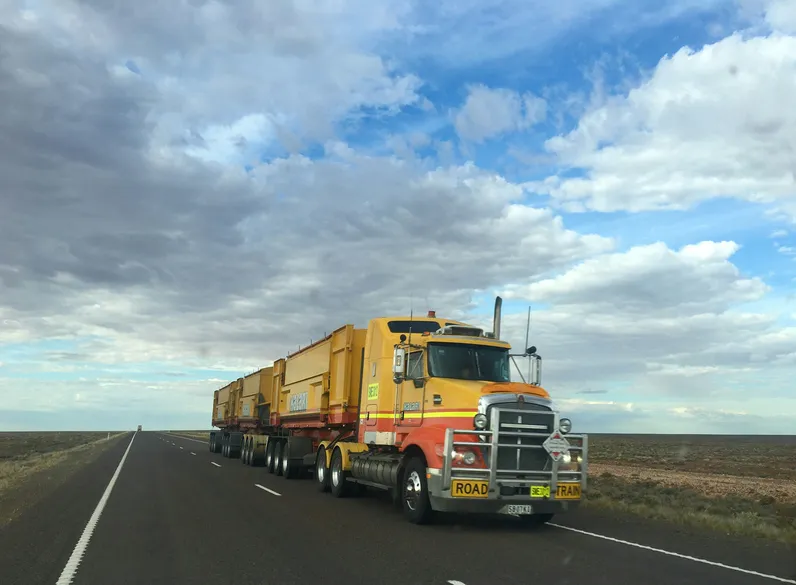
Beyond the Spreadsheet: How RootaRig Reinvents Trucking Allocation for Fast-Paced Fleets
For growing transport and heavy vehicle operations, the humble Excel spreadsheet is both a lifeline and a liability. It is infinitely flexible and blindingly fast to type into, but it is completely blind to regulatory safety, dimensional capacity constraints, and the chaos of multiple coordinators working on the exact same board.
When fleets scale past 15 trucks, spreadsheet routing fractures. Allocators accidentally overwrite each other's work, oversized loads get assigned to undersized rigid trucks, and Promised Delivery Dates fall through the cracks entirely.
Traditional Transport Management Systems (TMS) promise to fix this, but they introduce a new nightmare: click exhaustion. Dispatchers are forced out of their fast workflow into a labyrinth of pop-up windows, dropdown menus, and slow page reloads.
RootaRig was built to bridge this exact gap. It delivers the raw speed of a keyboard-first spreadsheet combined with the automated safeguards, real-time collaboration, and regulatory compliance of an enterprise-grade database.
Here is how RootaRig transforms back-office chaos into a high-velocity, safety-first operational command center.
1. Zero Pop-Ups, All Speed: Excel-Style Inline Allocation
Modern freight environments move too fast for heavy software interfaces. If a driver calls out sick or an urgent linehaul leg opens up, an allocator needs to shift assets in fractions of a second.
RootaRig eliminates the traditional "edit drawer" or pop-up modal. The dispatch board acts exactly like an interactive grid, optimized for pure keyboard navigation:
- Instant Autocomplete: Click into a cell or hit Enter on a focused row, and the cell transforms into a lightning-fast search box. Type a driver’s initials, the last four digits of a phone number, a vehicle registration, or a chassis number to pull up instant matching results.
- True Grid Mechanics: RootaRig overrides native browser defaults to preserve traditional spreadsheet behavior. Pressing Tab commits your driver assignment and moves focus instantly to the right (Truck cell). Pressing Enter commits the change and drops your cursor directly down to the next row.
- Safe Reversion: Hit Esc or click outside a cell to instantly revert to the previously saved state. The system never accidentally wipes an existing asset assignment.
By making every core allocation action reachable in under one second, RootaRig matches the muscle-memory speed of a spreadsheet without any of the data integrity risks.
2. Guardrails for the Chain of Responsibility: Smart Dimensional Warnings
In modern transport logistics, regulatory compliance is non-negotiable. Allocators face immense pressure to maintain strict safety standards under Chain of Responsibility (CoR) laws, yet manual spreadsheets offer zero protection against illegal or unsafe overloading.
RootaRig bakes physical and spatial constraints directly into the user interface through real-time Smart Parameter Warnings. Every vehicle asset in your database stores precise physical dimensions (Length and Height), which are automatically evaluated against inbound cargo requirements:
[ Visual Load Validation ] ⬤ GREEN: Optimal Fit (Cargo size perfectly matches rig specifications) ▲ AMBER: Tight Capacity (Length within 0.5m or Height within 0.2m of maximum limits) ✖ RED: Capacity Exceeded (Illegal/unsafe allocation flagged immediately)
If an allocator accidentally drops a small rigid truck onto an urgent job row requiring a heavy-duty platform to move an 11.2-meter industrial vehicle, RootaRig reacts instantly. The row highlights in soft red, a clear desktop toast details the exact mismatch, and the assignment is flagged with an advisory warning badge.
This instant feedback loop keeps compliance top-of-mind, preventing routing errors before the wheels ever touch the tarmac.
3. Ending the Office Tug-of-War: Real-Time Collaborative Concurrency
When 10, 20, or upwards of 50 allocators are managing different state-to-state lanes on the same system, data collision is inevitable. On a shared spreadsheet, one coordinator's update can silently wipe out another's work, leading to double-booked drivers and massive operational friction.
RootaRig solves this with a sophisticated, multi-layered concurrency engine designed for high-density transport offices:
- Advisory Presence Outlines: The second an allocator opens a driver or truck cell for editing, a blue pulsing outline wraps around that row on every other dispatcher's screen. A clear, native tooltip surfaces instantly ("Sarah is editing this row"), subtly guiding team members away from active collisions.
- Optimistic Row Locking: If two users happen to click commit at the exact same millisecond, RootaRig’s backend evaluates the data under an authoritative database lock. The first request is processed cleanly. The stale request is rejected safely.
- Graceful Rollbacks: If your update is outpaced by a teammate, your local board rolls back smoothly without jarring visual jumps. A clean context toast notifies you immediately ("Sarah assigned Kelvin here 2 seconds ago") and provides a one-click Reassign shortcut to quickly adjust your strategy.
4. Intelligent Fleet Optimization: Sticky Pairs & Learned Behavior
Back-office fatigue is a major driver of dispatcher turnover. Forcing staff to manually link the same driver to the same physical rig day after day is a waste of mental energy. RootaRig automates this administrative burden using predictive, adaptive defaults.
Preferred Overrides Meet Learned Autopiloting
RootaRig allows fleet managers to hard-code preferred vehicle profiles directly onto a driver's account. However, if a driver shifts vehicles frequently, RootaRig's backend adapts dynamically. It monitors historical data, securely caching and weighting the vehicle assets used across a driver's most recent completed trips.
The Dynamic "Auto-Fill" Advantage
The moment a dispatcher assigns a driver to a job line through any input path—whether typing inline, dragging from a sidebar, or using click-to-pick—RootaRig references the cache and automatically pairs the truck.
The truck cell fills instantly, marked with an "Auto" chip. If that specific truck happens to be in the maintenance bay, a single click on the companion "X" decouples the pair, allowing the allocator to hot-swap a replacement vehicle without unlinking the driver.
5. Structured Clarity: The Three-State "Free Right Now" Sidebar
A primary reason coordinators fall back on complex Excel filters is because traditional software hides away the true status of the fleet. RootaRig introduces an extensible, three-state segmented control system directly in the active workspace sidebar to map vehicle utilization instantly:
- All: A comprehensive view of the entire fleet. To prevent confusion, assets currently in transit are automatically pushed to the bottom of the list, styled with a clean grayed-out badge indicating their current manifest code and active location.
- Free Right Now: A highly filtered view showing only assets with zero active assignments, or whose latest manifest has officially transitioned to Delivered or Arrived. This allows dispatchers to instantly tap into local capacity for back-to-back local legs or quick yard-shuttle runs.
- On a Job: A dedicated window tracking active assets currently marked as Loaded, In Transit, or Scheduled, giving management a bird's-eye view of rolling fleet utilization.
Move Faster, Stay Compliant, Protect Your Margins
RootaRig proves that transitioning away from spreadsheets does not mean sacrificing speed. By matching the hyper-fast user experience of a grid with robust relational data validation, RootaRig empowers transport coordinators to work with absolute confidence.
Eliminate double-bookings, protect your equipment from illegal dimensional overloads, and give your back-office team the tool they deserve to keep your fleet moving safely and efficiently.
Frequently asked questions
- How does RootaRig differ from traditional Transport Management Systems (TMS)?
- Unlike traditional TMS platforms that force dispatchers into slow, multi-click workflows, RootaRig combines the lightning-fast, keyboard-first navigation of an Excel spreadsheet with the robust reliability of an enterprise-grade database. It eliminates "click exhaustion" by removing pop-up modals in favor of a responsive, inline interface.
- Can I maintain my keyboard-first workflow?
- Yes. RootaRig is designed to feel exactly like a spreadsheet. It supports familiar navigation shortcuts, such as Tab to move horizontally and Enter to commit changes and move down rows. Every core allocation task can be completed in under one second.
- How does RootaRig ensure safety and compliance?
- RootaRig utilizes Smart Parameter Warnings to prevent overloading. The system compares cargo requirements against the stored physical dimensions (Length and Height) of your vehicles. If an allocation is unsafe or illegal, the system flags the row with a red indicator and provides an advisory warning, helping you maintain Chain of Responsibility (CoR) compliance.
- How does RootaRig prevent team members from overriding each other?
- To solve data collision, RootaRig uses a multi-layered concurrency engine. It features "Advisory Presence Outlines" that show you exactly which rows your team is currently editing, preventing double-bookings. If two users attempt to update the same row, the system utilizes authoritative database locking to process the valid request while notifying others of the change.
- Does RootaRig help automate driver-vehicle pairing?
- Yes. RootaRig tracks historical data and "sticky pairs" to automatically suggest vehicle assets. Once a driver is assigned, the system can auto-fill the appropriate truck based on learned behavior or established preferences, significantly reducing manual data entry.